Highlights
-
Emotional grounding leads academic readiness: Building social comfort, self-regulation, and confidence matters far more than memorizing early flashcards.
-
Self-help skills build classroom stamina: Practicing handwashing, zipping jackets, and managing lunch containers sets children up for immediate daily success.
-
Consistent routines reduce transition friction: Aligning wake, meal, and bedtimes weeks in advance stabilizes emotional regulation during the school week.
-
Separation anxiety yields to predictable rituals: Short, loving goodbyes combined with concrete pickup assurances keep drop-off distress manageable.
-
Early literacy thrives through conversational play: Reading aloud daily and encouraging back-and-forth dialogue stimulates essential communication circuits.
-
Collaboration bridges home and school environments: Partnering early with educators and monitoring development creates a proactive support network.
Why Is Preparing Early for Pre K Crucial for Development?
Preparing your child for Pre K bridges the vital developmental space between toddlerhood and structured primary learning. According to clinical guidance on school readiness published by the American Academy of Pediatrics (AAP), authentic readiness encompasses physical well-being, emotional regulation, motor development, and language capability rather than raw academic drill-and-practice. When parents actively introduce structured expectations in a low-pressure home environment, young brains adapt to group dynamics, shared physical spaces, and teacher instructions without experiencing overwhelming sensory or social stress.
This proactive approach anchors long-term academic trajectories. Children who enter school settings with established conversational competence and self-regulation skills demonstrate higher social integration and confidence across their early elementary years. In contrast, abrupt transitions without gradual preparation frequently spark prolonged behavioral friction and attendance anxiety. By focusing on gentle lifestyle adjustments weeks before the academic calendar begins, families turn a potentially daunting life change into a predictable, celebrated step forward.
What Independence and Self-Care Skills Do Children Need?
Pre K classrooms rely heavily on group cooperation, requiring students to handle basic bodily needs and personal belongings with emerging autonomy. The Centers for Disease Control and Prevention (CDC) outlines essential developmental benchmarks for 3- to 4-year-olds that educators look for during everyday school hours:
-
Toileting and Hand Hygiene: Independently recognizing bathroom urges, unbuttoning or pulling down loose pants, wiping, flushing, and lathering soap for 20 seconds.
-
Mealtime Management: Opening pop-top lunch containers, unwrapping foil or baggies, drinking from cups without spills, and using child utensils comfortably.
-
Outerwear and Footwear: Putting on jackets, attempting large zippers or button loops, and slipping into Velcro shoes without adult intervention.
-
Clean-Up Responsibility: Returning toys, blocks, and art supplies into designated bins when prompted by two-step verbal instructions.
Children do not need complete mastery across all these tasks before entering the door, but genuine willingness to attempt them makes a measurable difference. Teachers frequently manage upwards of fifteen energetic students simultaneously, meaning that a child who can unfasten their own coat or open their applesauce pouch feels immediately capable and less distressed. Celebrating these incremental self-care victories around the house instills pride, ensuring everyday classroom tasks foster self-worth rather than defeat.
How Can Families Establish Healthy Pre K Daily Routines?
Predictable schedules establish an internal sense of security that young minds require to handle daytime separation and cognitive stimulation. At least three weeks before the official start date, parents should shift evening bedtime schedules and morning alarms toward the exact timeline demanded by the upcoming school day. Rushing out the door under time pressure floods a child’s nervous system with cortisol, impairing focus, patience, and appetite during circle time and morning learning centers.
Which Social-Emotional and Communication Milestones Matter Most?
Social competence and communicative expression are the cornerstones of classroom functioning. Evidence published by the National Association for the Education of Young Children (NAEYC) emphasizes that early childhood success stems directly from relationship-building, turn-taking, and learning to navigate emotional distress with adult guidance. A child entering Pre K benefits immensely from specific social habits that parents can nurture through everyday play:
-
Emotion Labeling: Expressing basic emotional states verbally (“I feel mad,” “I am tired”) rather than biting, grabbing, or having tantrums.
-
Collaborative Turn-Taking: Sharing toys or waiting patiently for an alternating turn in board games, sandboxes, and playground swings.
-
Two-Step Directive Following: Processing sequential instructions smoothly, such as “Hang your bag on the hook and pick your seat”.
-
Advocating for Help: Feeling comfortable approaching an adult authority figure to ask for water, bathroom access, or assistance with a task.
Nurturing these capacities begins around the living room floor. Engaging in cooperative board games, running small pretend play scenarios, and scheduling low-stakes playdates with neighborhood peers expose children to differing desires and inevitable disagreements. Guiding them through resolving conflicts without immediate adult intervention teaches vital negotiation and compromise strategies that smooth out social frictions in classroom centers.
How Can Parents Manage Separation Anxiety and First-Day Jitters?
Separation distress is a healthy developmental reaction, yet strategic preparation keeps goodbyes from escalating into prolonged panic. In the weeks leading up to school, arrange visits to the classroom, explore the playground, and meet teachers during school open houses to dissolve fear of the unknown. Reading reassuring picture books like Audrey Penn’s The Kissing Hand or Anna Dewdney’s Llama Llama Misses Mama validates feelings while modeling successful afternoon reunions.
What Play-Based Learning Activities Build Classroom Readiness at Home?
Academic readiness in early childhood develops through dynamic hands-on exploration rather than repetitive workbooks. Singing rhyming nursery songs, pointing out letters on cereal boxes, and reading aloud daily build phonemic awareness and print comprehension naturally. Asking open-ended questions like “What do you think happens next?” encourages analytical thinking and strengthens expressive language circuits without feeling like a formal test.
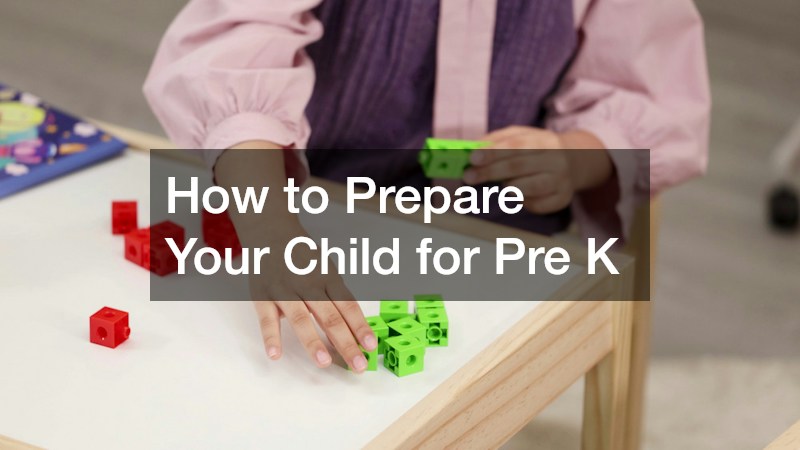
Fine motor dexterity, which underpins proper pencil grips and scissor usage, also matures through everyday play. Squishing modeling clay, stringing large pasta onto yarn, cutting paper with safety scissors, and building block towers refine finger coordination and spatial reasoning. Counting crackers during snack time or sorting colorful laundry socks connects abstract mathematical concepts to real-world objects, sparking an organic love for discovery.
Watching your child step into Pre K is a monumental milestone that marks the beginning of their formal educational voyage. Approaching this transition with calm intentionality, structured daily routines, and playful learning equips your child with emotional resilience and practical independence. When families treat school preparation as an empowering adventure rather than an academic performance review, children walk through classroom doors curious, confident, and ready to thrive.